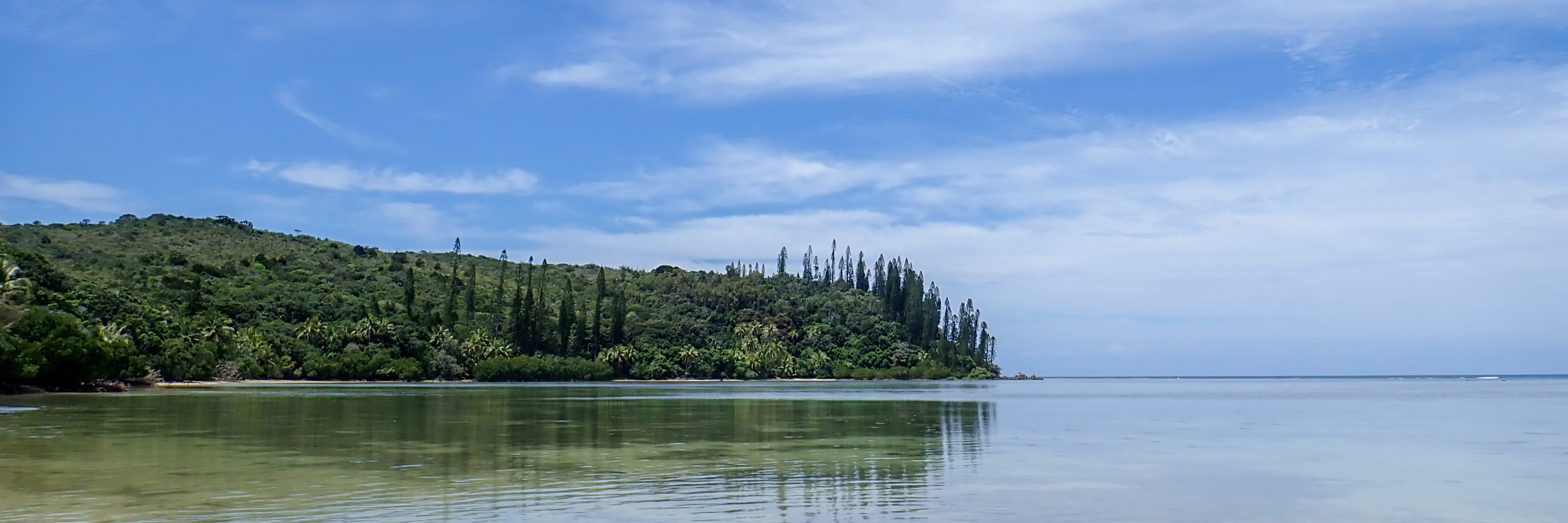
Lagoon neighbour: Ocellated Eagle Ray

New Caledonia, Coral Sea, South Pacific

Every time I see an eagle ray gliding through the water, a strange calm washes over me.

They move as if they carry the ocean’s deepest secrets, quiet, timeless, and filled with a beauty that stirs the soul.

Like in a silent dance, they drift by like whispers in the sea, elegant, unhurried, and full of wonder...


The ocellated eagle ray (Aetobatus ocellatus) is a species of cartilaginous fish, just like all rays and sharks.

It's known for its broad, wing-like fins and the eye-catching spots that cover its back -those spots are actually what inspired its name, since ocellatus means "having little eyes" in Latin.


The beautiful pattern of spots on its back is unique to each individual, much like a human fingerprint.


You can find this ray in warm, tropical waters across the Indo-West Pacific. It tends to stick around coastal areas, where it glides effortlessly through the water.

Interestingly, this species used to be grouped together with the spotted eagle ray (Aetobatus narinari), but scientists later found enough differences to split them into separate species. The spotted eagle ray is now considered an Atlantic-only species, while the ocellated eagle ray lives in the Indo-Pacific. 


Ocellated eagle rays mainly feed on shellfish, like clams, crabs, and other small creatures that live on the seafloor. They use their flat, strong teeth to crush the hard shells of their prey.

They give birth to live young, a process called ovoviviparity, where the babies develop inside eggs that stay within the mother’s body until they hatch.

Since they don't have many offspring and reproduce slowly, their populations are sensitive to fishing pressure and habitat loss. Due to its vulnerability and declining populations in some regions, Aetobatus ocellatus is of conservation concern.


Lagoon neighbour: Cowtail Stingray

New Caledonia, Coral Sea, South Pacific

Five meters beneath our sailboat, a cowtail stingray is feeding on the sea floor. One of our many aquatic neighbours in the New Caledonian lagoon so fun to watch and observe...


Also called broad cowtail stingray, fantail ray or feathertail stingray, this stingray's name refers to its tail. In latin it is named Pastinachus ater. This species occurs in tropical marine waters of the Indo-West Pacific and can reach a total length of 3 meters and width of 1,8 meters.

It is a bottom feeder, foraging on the seafloor, sifting through the sand in search for food such as small bony fishes and a range of benthic invertebrates, including crustaceans, molluscs and marine worms. When finding its meal the ray use suction force to inhale the prey before chewing and swallowing it…


"Våra Andetag" -new song release!


 My dear sister Nanna releases yet another of her masterpieces.

 This time:  

"Våra Andetag"

(Our Breaths)   
 

- on February 27! ❤️


Listen on Spotify HERE 🤠

Other music channels HERE 💃


Merry Everything & Happy Always!

Wonderful Planet Tellus, Dec-Jan 2024/25

From the blue lagoon of New Caledonia, to the pristine white continent of Antarctica, followed by South Georgia´s wondrous, mountainous landscape, I am wishing you all a wonderful and happy 2025!

Be kind, spread smiles, merry everything and happy always! 🌟


The Rebel Soul -new song release!


 My talented sister Nanna releases yet another of her masterpieces.

This time:  

"The Rebel Soul"  
 

- on December 19! ❤️


Listen on Spotify HERE 🤠

Other music channels HERE 💃


Octopus Farming in Gran Canaria?


The Spanish seafood company Nueva Pescanova intends to start commercial octopus farming in Gran Canaria in the Canary Islands. Octopuses are highly intelligent, curious and naturally solitary beings who are not suited to the overcrowded conditions that are typical of factory farms. To intensively confining these creatures into crowded, high stocking densities would likely cause unnatural aggression, cannibalism, injury, and death as they fight and struggle to escape.

This video explores why scientists believe that this should not be allowed to happen... 


South Lagoon & Coastline

New Caledonia, Coral Sea, South Pacific, Sept/Oct 2024

Humpback whales visit the lagoon of New Caledonia for couple of months every season, when they normally are seen between July to September. The whale season has come to an end and the whales are about to leave their breeding grounds to start their long migration south towards their feeding areas in Antarctic waters.

In the great south lagoon of New Caledonia, we observe several humpack whales leaving the lagoon for deeper waters. During the whale observation our attention gets distracted by a white plunge-diving bird. It is a red-tailed tropicbird succefully catching a fish which takes the seabird quite some struggle and time to swallow...


When weather deterioates we seek shelter at the very southern tip of the New Caledonian main island. Here the coastline provides a great variation of steep red cliffs, mangroves and small, wild beaches.

When approaching the anchorage, the scent of wild flowers and sound of chanting birds is a lovely contrast after a good time on the salty sea. Later on, the coastline gets explored further by paddle and foot. 

This wild corner ruled by wind and tide, has for quite some time become one of our favorite getaways...


Among Salt Spray, Lakes & Trolls

Orust, West Coast of Sweden, Scandinavia, September 2024

After months far out on the beloved Ocean, it is good to be back among trees, lakes and luscious landscapes.

The Swedish West Coast is famous for its bare cliffs, salt-sprinkled archipelago, and cute fishing villages, but there is also a lot of beautiful green and lush here. One of my absolute favourites, a peaceful place to be where the sea, forests, lakes and trolls never are far...


The Arctic Giant - The Bowhead Whale

Barents Sea, High Arctic, June-August 2024

During our recent marine mammal survey in the Arctic, where we spent time surveying in the off shore waters of the Barents Sea and around Svalbard, we spotted the elusive bowhead whales out in open waters south of Svalbard´s mountainous archipelago.


This whale species is the only full-time arctic resident among the baleen whales and is normally found near or in the sea ice.


From above water one doesn’t see much of this skim feeding giant when it swims at the surface with its mouth wide open. This Arctic baleen whale is a filter feeder, feeding mainly on zooplankton, including krill, copepods and other crustaceans.


Its raised nostrils and lack of dorsal fin are thought to be adaptations to living in ice. This Arctic giant is considered to be the longest-living mammal, reaching an age of well above 200 years.