Antarctica with Waterproof Expeditions

.

.
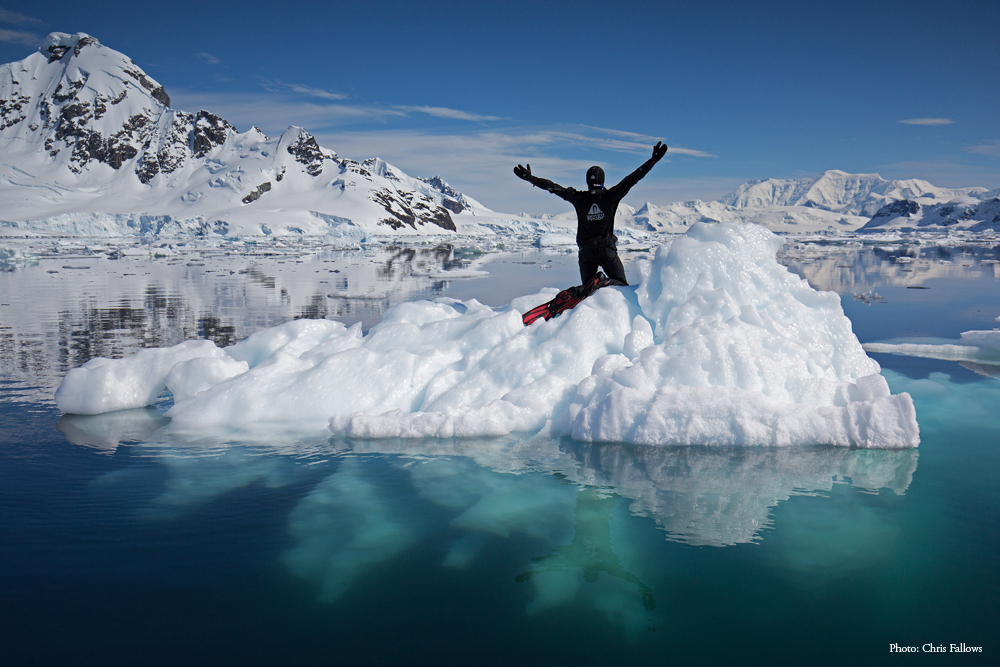
Drysuit and warm undergarment are packed again and I am just about to start another travel, this time south towards Antarctica, where I will be snorkel guide for Waterproof Expeditions for the next 3 weeks ahead. 

This means I will soon be signing off from the modern communication world to instead be totally surrounded by remoteness, cold beauty and wild wonders. This in happy company of fellow nature- and adventure seekers.


.
Time to say hello to icebergs and penguins again, and to meet new and old friends onboard our mobile home, the expedition ship "Polar Pioneer".

The pics in this blog are from my previous  trip to Antarctica with WPX.


.
In hope to also meet you on similar adventures in future, have a look at Waterproof Expeditions web to read more about  their many exciting expeditions and destinations: www.waterproof-expeditions.com

More from me in some weeks, when back to civilisation again!


Shallowest Deep Water Coral Reef

.


.
A blog about the fascinating coral reefs hidden in the dark depths of Scandinavian waters, unique habitats who not many are aware about. And the big dream of diving the shallowest deep water coral reef known in the world...

Crystal clear, warm waters are normally what we imagine when thinking about coral reefs. This is as corals normally require sunlight and therefore commonly grow in the clear, shallow waters of tropical and sub-tropical seas.


But corals are not only warm-water creatures. There are actually many coral species living in cold waters and at great depths, sometimes hundreds or even thousands of meters below the surface.

Let me take you on a journey to the place where my great dream of diving a cold-water coral reef would finally come true, to the refreshing waters of Norway, where the Lophelia pertusa corals thrive in the cold and dark environment.

Unlike tropical corals, cold-water corals don’t have symbiotic algae living in their polyps which is why they don’t need sunlight to survive. Instead, they feed solely by capturing food particles from the surrounding water, and their polyps tend to be much bigger than tropical corals.


.
Lophelia pertusa is a fascinating deep-water coral which normally lives at depths between 100-1000 meters. This reef building coral species can also be found at even greater depths, sometimes as deep as 3000 meters or even more… They are slow growing corals (usually growing about 5 to 10 mm per year), but over time they form extensive reefs. The largest recorded Lophelia reef “Røstrevet” measures incredible 3 kilometers in width and 35 kilometers in length, and lies at a depth of 300–400 meters off the Lofoten Islands in Northern Norway.


.
As impressive as it is to know that Lophelia reefs have been dated to an age of 8,700 years, scientists believe that Lophelia pertusa reefs can be up to a remarkable 10,000 years old! These are reefs which are home to diverse communities, where a total number of identified species on one particular reef, in the Northeast Atlantic is over 1100.

But as these corals are extremely slow growing, they are easily harmed by fishing practices, or oil exploration and extraction. In Swedish waters, for example, there were three known reefs, of which two of them are already gone, a result from destructive bottom trawling.

And here in Norway, the Norwegian government currently wants to open up for oil drilling in the area close to where the world’s biggest known reef “Røstrevet” is located…


.
Knowing the Lophelia pertusa is a deep-water living coral, what are the odds of finding such a cold-water coral reef shallow enough to be able to experience it while diving?


.
During the recording of our film “Coral Gardens of Scandinavia”, our final goal was to achieve our great dream of experiencing a Lophelia reef with our own eyes while diving. To realize this big dream of ours, we sailed to Trondheimsfjorden in the west-central part of Norway.

In the year 2000, a local diving club “Leksviks dykkeklubb” found an extraordinary reef “The Tautra Reef” at a depth of approximately 40 meters inside this fjord. Since then, this Lophelia reef has become the shallowest cold-water coral reef known to the world.


To be able to find and dive this unique reef, a free descent in open water down to 40 meters is needed. The location has a strong current, and we therefore needed to carefully plan the dive according to the tide table. At 40 meters, the cold and vast surrounding is completely dark. Even not the slightest beam from the smiling sunshine above is able to reach us down here.

In the never ending darkness, thanks to the strong light from our film lamps, we finally started to glimpse a shadow big as a car. Slowly, the white reef started to appear in front of us. It is the Tautra Reef!


.
When peacefully swimming next to the world’s shallowest deep-water coral reef known to man I felt a great admiration and deep respect. It’s such an unique place, a reef that has probably existed for thousands of years, and a home to multiple marine life of various kinds…


.
There is such an amazing world hidden in our oceans, much of it yet not explored, but it so easily gets ruined if we don’t take responsibility to protect and preserve its fragile habitats.

Below a sequence from our film “Coral Gardens of Scandinavia”.


.
For further reading about our ventures in the Norwegian fjords, or other destinations, search this blog (top-right) or read my posts on the PADI-blog: https://www2.padi.com/blog/?s=Birgitta+Mueck


SE-version of Winter Whales on SVT-play

.


.
Our most recent film "Norges Vintervalar" (Winter Whales of Norway) have now had TV-premiere on Swedish National Television (SVT).

Many thanks for all the wonderful feedback we have received! 🤗 ❤️


.
This Swedish version of the film will be available on SVT-play until the 28 of June 2019. So in case you understand Swedish, or would like to practice your language skills 😁 👍, here is the link:

https://www.svtplay.se/video/20464096/norges-vintervalar?info=visa


Cape Verde -surrounded by blue

.

Sal, Cape Verde, Dec/Jan 2018/19

Except for a couple of ventures on other water bodies, 2018 has mainly been focused on the Atlantic Ocean and some of its many alluring islands. The year past amazingly quickly and to nicely wrap it all up, we completed it by investigate a, for us, new Atlantic destination.

Surrounded by blue water and sky I so welcome the new year with plenty salt and an increasing amount of sand in my messy hair 😆

Before it´s time to make the jump north again, I´d like to share some few pics from our recent stay here on the island of Sal in Cape Verde.

Cape Verde is an archipelago of 10 volcanic islands situated approx 500 km west off the coast of Senegal in Africa.

Excited about the opportunities, possibilities, adventures and surprises that might await in 2019, I´m so wishing you all a wonderful and lovely new year! ✨💕✨

... and remember -Every day is special, make it count! 🧜‍♀️


TV-premiere!!

.

Time for

TV-premiere!
for our movie

"Winter Whales of Norway"
Sunday 30th of December 7PM (UTC+1) on SVT2 

A collaboration between Crystal Water Film Production & Swedish National Television. 
Music composed by Soundology. 
©2018


Guiding Winter Whale Trips In Norway

.

Troms, Northern Norway, November 2018

To me, Northern Norway, with its spectacular fjord scenery, is a paradise in itself. Nature here is strikingly beautiful with snow covered mountain peaks, long, deep fjords, glaciers and sheltered valleys.


.
An Arctic Wonderland where the cold winter nights often are lightened up by the magical dancing northern light.


.
For the past 8 years or so, the scenic nature of county Troms has been accompanied with yet an other amazing natural attraction.

It is the winter whales that again put the arctic winter in Northern Noway on the bucket list of many.


.
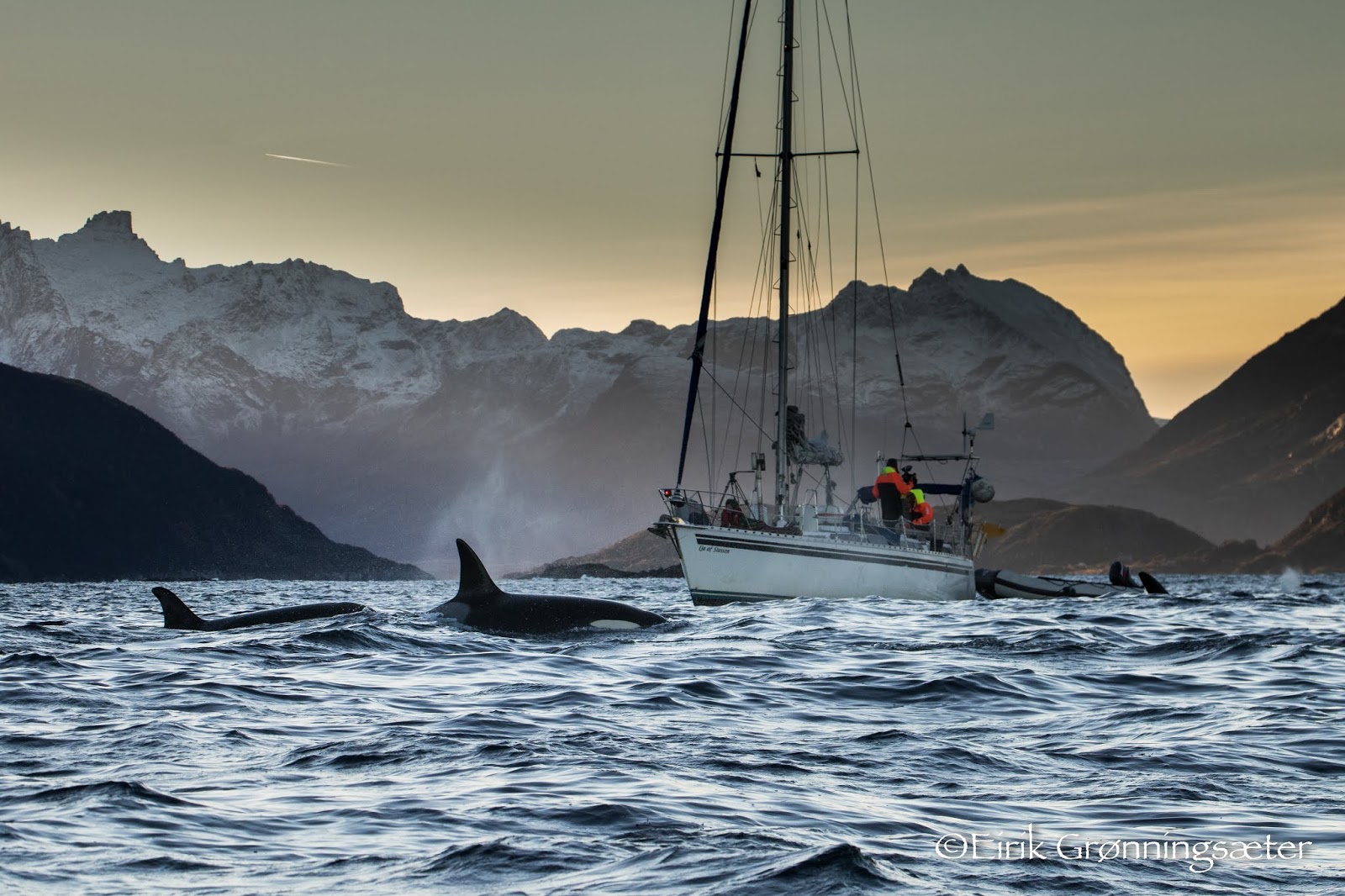
The huge amount of orcas and humpbacks, gathering in the fjords to feast on the overwintering herring, is also the reason to my repeatedly annual visits here during the darkest and coldest time of the year.


.
This time, I'm here during the entire month of November, guiding four winter whale trips for Waterproof Expeditions.


.
Out in field, we work patiently with the animals, spending plenty time observing the behaviour of these fascinating cetaceans, to get good and gentle encounters for both animals and our guests.


The whales attract a lot of spectators and the number of whale watching boats on the fjord has rapidly been increasing every year. Despite the many vessels, we try our best to escape the crowd with the aim to be surrounded by nothing else but nature and the wildlife.


.
The video below, made by Vera Gudenrath who joined our second November trip, nicely shows how we operate during our expeditions:


The growing number of tour operators does make it harder to be alone with the whales, but with enough time, will and patience, the getaway to the more isolated fjords pays off. Surrounded by the sound of silence and in company of relaxed whales, this is the magical place to be.


.
The following footage is captured by Manuel Clavel Rojo, who joined our first trip of the season:


I feel very fortunate to meet so many wonderful people during our trips and to be able to share and experience this Norwegian paradise and its amazing wildlife together with fellow nature and wildlife enthusiasts.


.
Video next is made by Susanne Spindler, who joined M/S Malmö´s very last winter whale trip of the year:


Time flies quickly when busy and in good company, the month of November has therefore been passing by in high speed and my guiding assignment for this winter whale season has so found an end.


.
My biggest thank you to the awesome crew and co-guides for great cooperation and superb teamwork. Your countless smiles make life onboard our cozy live-aboard ship M/S Malmö a true pleasure and I hardly can wait for next time working with you all.


.
Many warm thanks also to all our wonderful guests for joining our trips. The world is small for like minded people so I´m living in great hope to meet you again, whether it is in cold or warmer waters!


.
Grateful for yet another wonderful month in these spectacular fjords, where the gentle giants have showed us their daily presence in great numbers, I’m now off towards further adventures.

Bye winter whales, maybe I will meet you down south, or next autumn!


Time For Drysuits Dance Again!

.

Troms, Northern Norway, November 2018

Back to colder latitudes guiding for Waterproof Expeditions

Leaving the wetsuits behind, my most important piece of clothing for the entire month of November is now my drysuit.

Surrounded by snow covered mountain peaks, I'm very much looking forward to share new Arctic adventures with like-minded people here in the aw-inspiring fjords of Northern Norway!

It might sound cold to be snorkelling in these winter fjords, but when properly dressed it actually is comfortable to be roaming the underwater world even north of the Arctic circle.

Do you remember my cold water dress code shared in an previous post on the blog? In case you too are heading for some cold water adventures, here is the link: Dressing For Cold Water

And don't forget to keep moving, the drysuit dance keeps you both warm and smiling! 💃🏻