Antarctic Minke Whale


Antarctic Peninsula, February 2023

Every southern summer, baleen whales migrate to the cold and remote waters of Antarctica to spend several months feeding on krill. 

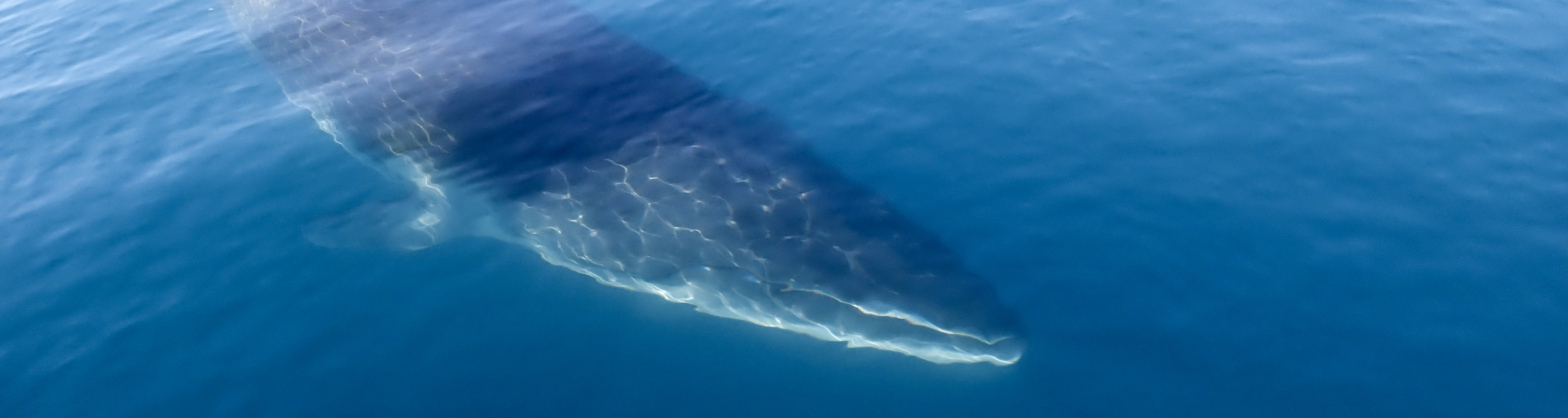
One of them is the Antarctic minke whale. This species has a small, compact body, and short fins, making it well suited to life in the pack ice where they can easily maneuver in narrow spaces between ice floes.


With a length of approximately 7-10 meters, the Antarctic minke whale (Balaenoptera bonaerensis) is one of the smallest baleen whales, with only their close relative, the northern minke (also called common minke), as well as the pygmy right whale being smaller.


Little is known about the population distribution and individual movement patterns of Antarctic minke whales. They are found in all seas in the southern hemisphere and sometimes ranges into the northern hemisphere. In summer, they feed in Antarctic waters, and during winter most of them move north to more temperate or tropical waters to mate. They inhabit both offshore and coastal waters. 


Both mating and calving usually occurs during the winter. After a gestation lasting 10-11 months, a single, approx 2,5 meter long, calf is born. Like all mammals, minke calves drink their mother's milk until they are weaned, at about 4-6 months. They remain with their mothers for up to 2 years and are sexually mature at about 7-8 years old.


The minke whale has a snout which is distinctively narrow, triangular, and pointed. Sometimes they use their beaks to break ice that is several centimeters thick, in order to create breathing holes.


They are usually seen on their own or in pairs or threes, but can also be found in bigger groups of up to 10 to 15 animals.


The dives of the minkes normally lasts around 2 to 6 minutes, then they spend about a minute up at the surface, where they blow 5 to 8 times before starting another dive. During deep dives the minke whale can hold its breath for as long as 20 minutes.


Here in Antarctica, we have met several curious minke whales, which for me is among the highlights of the trips. The photos in this post are from our recent encounter at Cierva cove at the Antarctic Peninsula.




The Green Sea Turtle

New Caledonia, Coral Sea, South Pacific

The green sea turtles are among the creatures keeping us more or less daily company in the New Caledonian lagoon.

An appreciated company they are and we very much enjoy watching these cute and charming beings from the boat and underwater.


Of 7 sea turtle species worldwide, there are 4 species known to occur in New Caledonia, of which the green sea turtle is the most abundant.
 
They are among the largest species of sea turtle, with an average length of around 80-120 centimeter. One of the larger green sea turtles known measured 153 centimeters and had a weight of 395 kilograms.


Peaceful beings they are, commonly found in seagrass meadows and around coral reefs. Their diet changes with age, the first few years of a green sea turtle’s life are spent in open water, where they feed on plankton, crustaceans, jellyfish and fish eggs. As they grow older, they move to shallower waters along the coast, such as bays and lagoons, where they mainly feed on marine plants such as seagrass and algaes.


Similar to other sea turtles, green sea turtles migrate long distances between their feeding grounds and their mating-nesting sites, with recorded distances longer than 2,600 kilometres. Mature turtles often return to the exact beach from which they hatched.


Their ability to return to their birthplace is known as natal homing. Females usually return to their hatching beach every two to five years, whereas the males may make the journey annually.

After mating, the female crawls up on the beach at night. She digs a hole in the sand where the eggs are laid and well covered. The female seems to be doing this 3 to 5 times in one season. 

It takes about 2 months before the eggs start to hatch and it is time for the small baby turtles to take the dangerous trip to the ocean. They find their way by heading toward the brightest direction. On a natural beach, this direction is the light of the open horizon.


Turtles can rest underwater for several hours at a time, but their underwater time is much shorter when diving for food or escaping predators. They usually cruise in slow speed around 3 km/h, but if threatened these amazing creatures can reach a speed of up to 35km/h.


Some are more shy than others and in general we se more relaxed individuals in the marine protected areas of the lagoon, where there also is a bigger change to get a curious encounter. Sure thing is that I love every moment spent with these special and charismatic creatures!


Merry Everything & Happy Always


New Caledonia, South Pacific, December 2022

Powered by wind, sun and salty waves, where the blue- and grey scenery is ever changing and the company are of the aquatic kind, we wish you all beautiful end of the year and a wonderful start of 2023!

Merry Everything & Happy Always!


From Land To Sea

New Caledonia, South Pacific, End of November 2022

After two months in the boat yard, for annual maintenance and additional improvement work of the boat, we are very eager to finally get back in the water to visit new places in the vast lagoon.


To Eat And Not To Be Eaten

New Caledonia, South Pacific, End of September 2022

Out on the blue lagoon, we love spending time watching the natural scenes surrounded, above and beneath the salty ocean surface...


Underwater, there is an endless variety of marine life to observe and it is always so interesting to see the many different behaviours, which so often are about finding food and not to be eaten... 


Feather Starfish are a common sight in the lagoon, these special creatures are passive suspension feeders, filtering plankton from the surrounding sea water with their feather-like arms…


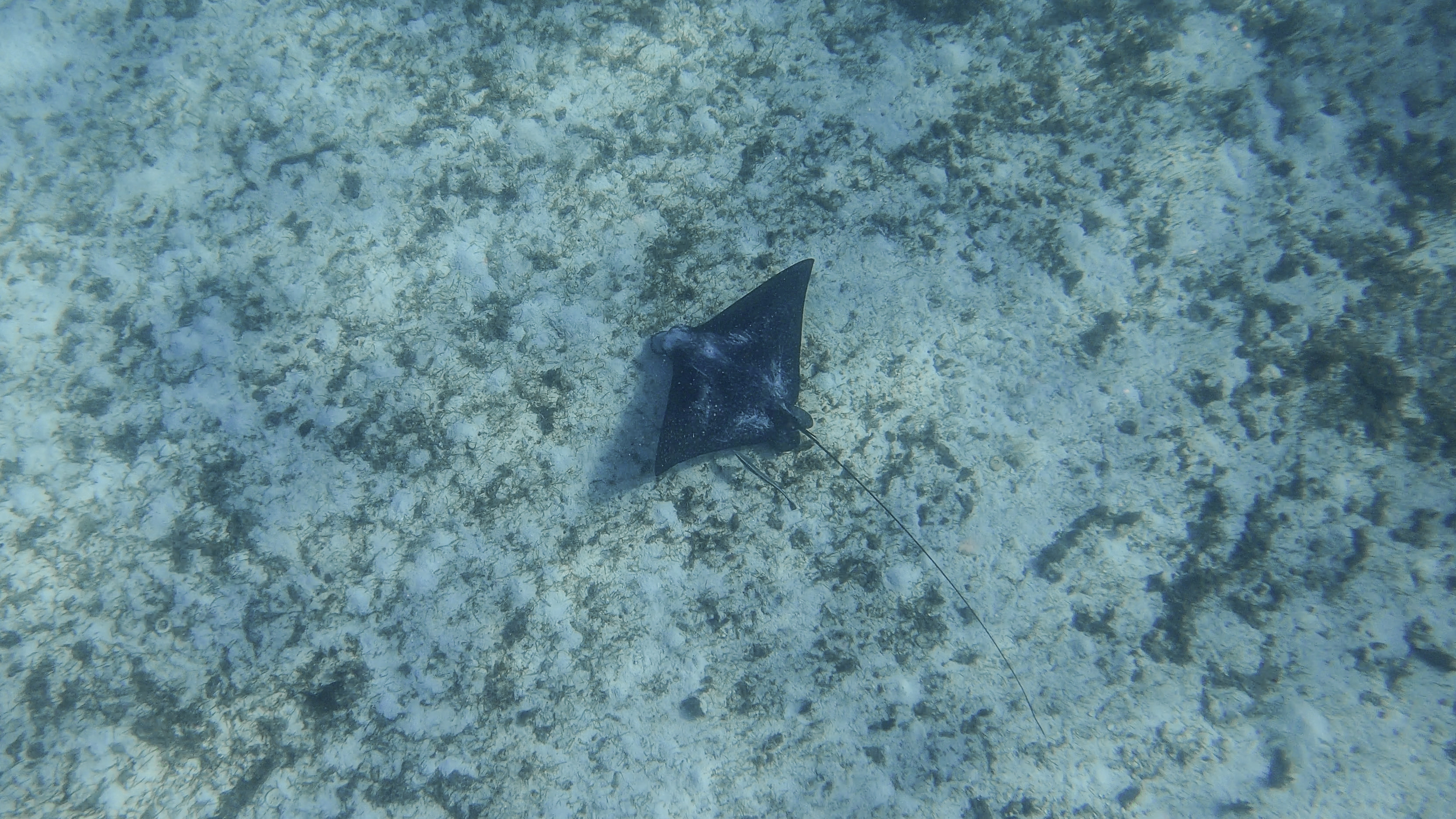
... meanwhile the spotted eagle rays use their flattened snout to dig into the sandy bottom. Oftentimes their prey is buried in the sand, which the rays dislodge and capture. 

This species of eagle ray has a specialised v-shaped tooth structure helping it to crush mollusks' hard shells, they also like to feed on crustaceans, such as crabs and shrimps, as well as small fish.


The cute and tiny green chromis forms large feeding aggregations above branching corals, where they feed on plankton, algae, and crustaceans, as well as finding a valuable home and shelter.


Sea kraits are semiaquatic, spending time both on land and in the sea. They hunt underwater, where we see them actively looking for food among the corals. These venomous, but nonaggressive, creatures are known to feed on moray eels, conger eels, squid, crabs, and fish.


The trumpet fish on the other hand stalks its prey by hovering almost motionlessly, often in a vertical, head-down position, waiting for its prey to get closer... It too like small fish and crustaceans.

Once close enough, it rapidly dart in, capturing the prey by suddenly expanding its tube-like mouth, which generates a suction strong enough to draw in their prey.


Big or small, underwater or on land, so much there is to observe, learn from and get fascinated about in wonderful nature!